

 Select your language:
An MD in Gynecology Reveals: Rebalancing This Overlooked “Belly Bulging” Hormone Could Help Lose Menopausal Weight For Good

“Think about this – menopause triggers such weight gain that nearly 1 in 2 women (43%) become obese during this period.1
Many of them start meticulously counting calories and changing their diets.
Some up their exercise, exhausting themselves with daily workouts.
Yet, when it comes to losing menopausal weight, usually, these provide little to no effect.
And according to the expert, it’s not because women are doing something wrong or don’t try hard enough.
“Recent studies have found that it’s not just estrogen and progesterone that fluctuate during menopause.2
It’s another seemingly unrelated hormone that many experts have overlooked for years.
This hormone causes fatigue, joint pain, low libido, and, that’s right, weight gain.3
And I want to explain how virtually any woman can ‘rebalance’ it to lose menopausal weight for good,” she said.
But first, it’s important to understand why “eating less and moving more” no longer works during menopause
According to Dr. Levin, women may start gaining unexplained weight up to ten years before actual menopause.4
It’s because the changes she was about to explain begin during the transitional phase.
“You see, as a woman’s body enters perimenopause, estrogen levels rapidly decline.
And the changes that follow make it extremely difficult to lose weight and keep it off:
- Metabolism slows down, burning fewer calories5
- Insulin resistance ramps up, promoting fat storage6
- The levels of ‘appetite hormones’ surge, increasing hunger7,8
But it’s actually not just weight but also the way it creeps up that frustrates women so much.”
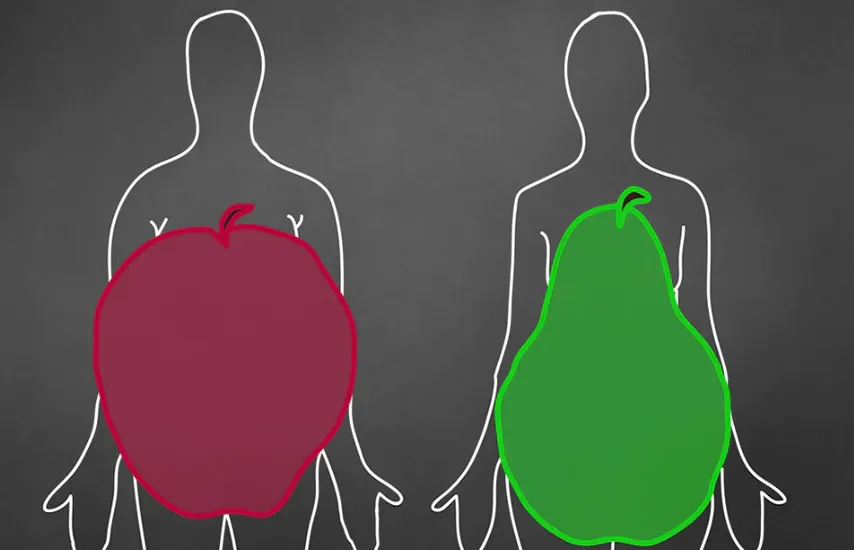
The expert explained that during perimenopause and menopause, the fat distribution changes.9
Which is why even previously thin women may eventually gain a belly.
“Now, what also matters is that belly fat and visceral (hidden) fat pose serious health risks.
Meaning that it’s not just about the shift from a pear or hourglass to an apple-shaped figure.
But also about an increased risk of stroke, heart disease, diabetes, and even cancer,” said Dr. Levin.10
While it all starts with declining estrogen, even HRT may have little to no effect on menopausal weight
The expert explained that if it had, 43 percent of women wouldn’t get obese during menopause.1
It’s because most remedies either support or replace declining estrogen.
Which helps with hot flashes, night sweats, mood swings, and, to a certain extent, weight gain.11
But these treatments have no impact on another hormone scientists recently found to also contribute to an ever-increasing belly.
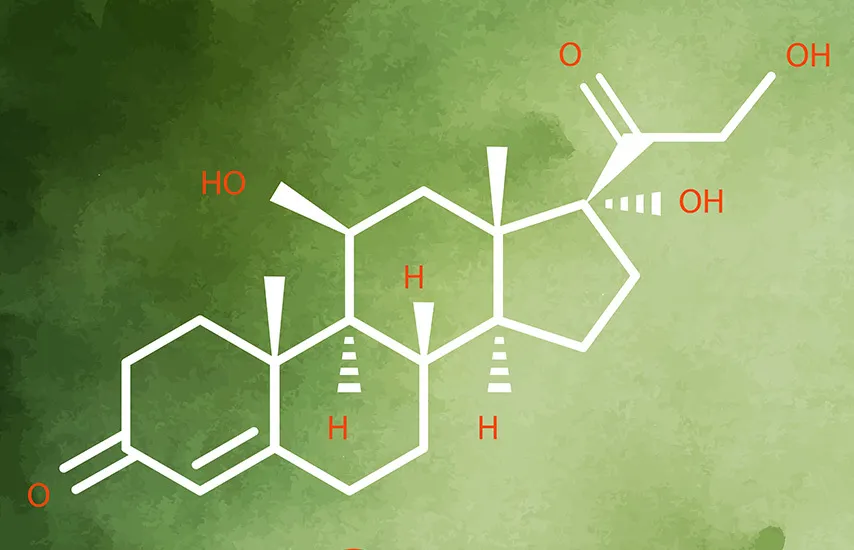
It appears that at the exact same time estrogen begins to fall, the levels of cortisol skyrocket.2
Known as the ‘stress hormone,’ cortisol helps the body manage and respond to stress.
However, when it surges to unhealthy levels, it leads to a series of problems.
“Poor sleep, fatigue, cravings, gut issues, joint pain, bad mood, and weight gain around the belly.
Scientists now say that elevated cortisol causes all these issues.3
Which explains why estrogen-regulating treatments rarely help with meno-belly or relieve other menopause symptoms completely.”
The common ways to lower this “overlooked” hormone and why they don’t work during perimenopause and menopause
When Dr. Levin stumbled upon this discovery, she immediately knew it could make a distinct difference for so many women.
Especially for those struggling with unexplained weight gain around their stomachs.
So, she figured out how endocrinologists suggest lowering cortisol levels:
- Getting enough good-quality sleep
- Exercising regularly and staying active
- Eating a healthy, balanced diet
- Lowering stress and staying relaxed
“Now, these are good guidelines, but it’s nearly impossible for menopausal women to follow them.
Because poor sleep, fatigue, cravings, stress, and anxiety are persistent menopause symptoms.
But that doesn’t mean there’s no way to lower cortisol and get in great shape in middle age.”
There’s now compelling research showing that these two compounds may lower cortisol levels by 39 percent
Dr. Levin wasn’t sure at first if menopausal women really could significantly reduce cortisol.
But then she found a study published in the European Journal of Clinical Research.12
What Japanese scientists discovered was that cortisol levels could be lowered with probiotics.
And this research is further supported by another clinical trial.13
Which also found the second cortisol-lowering compound.
“This study concluded that probiotics and prebiotics lowered cortisol by 20 and 19 percent, respectively.
Which wasn’t a coincidence because the placebo group showed zero improvement.
But I found something even more interesting,” she said.
It appears that the gut microbiome is the key regulator of circulating estrogen.14
And, according to NYU scientists, specific probiotic strains can metabolize this hormone.15
Meaning that carefully selected ingredients could reduce cortisol and support declining estrogen levels.
Dr. Levin suggests this particular supplement to her patients, and their feedback has been overwhelmingly positive
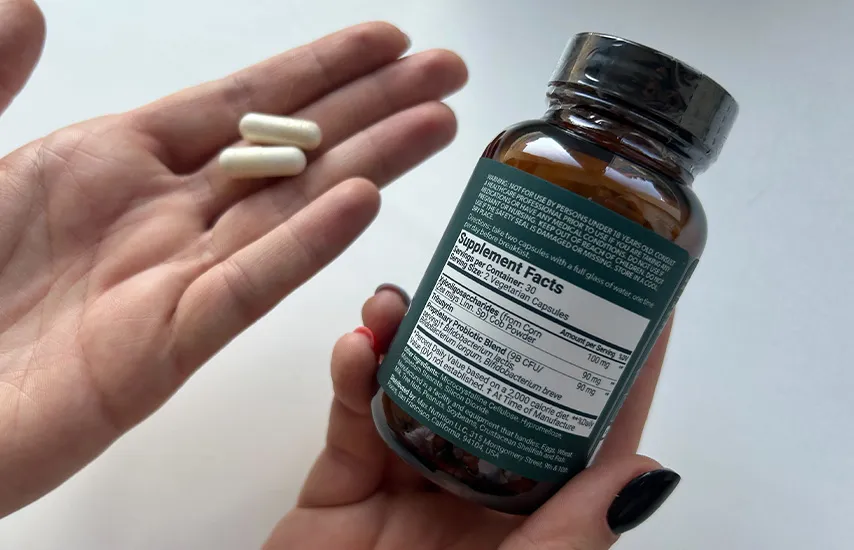
“After I did all that research, a couple of renowned gastroenterologists helped me find a product that would tick all the boxes.
Which is why my patients report losing menopausal weight they couldn’t get off before.
And also noticeable improvements in other symptoms, which I will explain in just a moment.
But before that, I want to clarify why this supplement, called Bioma, works,” said the expert.
First, it contains three types of Bifidobacteria – one of the few strains that metabolize estrogen.16
Second, prebiotic XOS lowers cortisol levels and selectively feeds Bifidobacteria.17
Third, postbiotic Tributyrin creates a favorable environment for these two to thrive in the gut.18
And fourth, Bioma uses delayed-release capsules so that its users get the exact amounts of these ingredients they see on the label.
“That’s why my patients can experience the benefits of both lowered cortisol and elevated estrogen.
Including better sleep, improved libido, smoother digestion, less mood swings, and weight loss.
And, of course, the shrinking belly, which, during perimenopause and menopause, may appear overnight seemingly out of nowhere,” concluded Dr. Levin.
Try Bioma for menopausal weight management support with free shipping and a money-back guarantee!
The information on this website has not been evaluated by the Food and Drug Administration. These products are not intended to diagnose, treat, cure, or prevent any disease. We value and respect our customers’ privacy, and in some instances, we have used visual elements to preserve their identity. *All individuals are unique. Your results can and will vary.
Sources
1. Weight Regulation in Menopause
https://www.ncbi.nlm.nih.gov/pmc/articles/PMC8373626/#R1
2. Cortisol Levels during the Menopausal Transition and Early Postmenopause: Observations from the Seattle Midlife Women’s Health Study
https://www.ncbi.nlm.nih.gov/pmc/articles/PMC2749064/
3. Cortisol and Menopause
https://www.positivepause.co.uk/menopause-blog/cortisol-and-menopause
4. Why am I gaining weight so fast during menopause? And will hormone therapy help?
https://www.uchicagomedicine.org/forefront/womens-health-articles/2023/april/menopause-weight-gain-hormone-therapy
5. Understanding weight gain at menopause
https://www.tandfonline.com/doi/full/10.3109/13697137.2012.707385
6. Interplay Between Insulin Resistance and Estrogen Deficiency as co- Activators in Carcinogenesis
https://link.springer.com/article/10.1007/s12253-011-9466-8
7. Change in adipocytokines and ghrelin with menopause
https://pubmed.ncbi.nlm.nih.gov/18280066/
8. Estrogen Deficiency and the Origin of Obesity during Menopause
https://www.ncbi.nlm.nih.gov/pmc/articles/PMC3964739/
9. Changes in Weight and Fat Distribution
https://www.menopause.org/for-women/sexual-health-menopause-online/changes-at-midlife/changes-in-weight-and-fat-distribution
10. How to reduce visceral body fat (hidden fat)
https://www.healthdirect.gov.au/how-to-reduce-visceral-body-fat-hidden-fat
11. Hormone Therapy for Menopause Symptoms
https://my.clevelandclinic.org/health/treatments/15245-hormone-therapy-for-menopause-symptoms
12. Effects of Lactococcus lactis subsp. cremoris YRC3780 daily intake on the HPA axis response to acute psychological stress in healthy Japanese men
https://www.nature.com/articles/s41430-021-00978-3
13. Effect of prebiotic and probiotic supplementation on circulating pro-inflammatory cytokines and urinary cortisol levels in patients with major depressive disorder: A double-blind, placebo-controlled randomized clinical trial
https://www.sciencedirect.com/science/article/abs/pii/S1756464618306170
14. Estrogen-gut microbiome axis: Physiological and clinical implications
https://pubmed.ncbi.nlm.nih.gov/28778332/
15. Microbiome and malignancy
https://pubmed.ncbi.nlm.nih.gov/22018233/
16. Modulation of the Gut Microbiota Structure with Probiotics and Isoflavone Alleviates Metabolic Disorder in Ovariectomized Mice
https://www.ncbi.nlm.nih.gov/pmc/articles/PMC8225012/
17. Xylooligosaccharides Increase Bifidobacteria and Lachnospiraceae in Mice on a High-Fat Diet, with a Concomitant Increase in Short-Chain Fatty Acids, Especially Butyric Acid
https://www.ncbi.nlm.nih.gov/pmc/articles/PMC8041301/
18. Tributyrin alleviates gut microbiota dysbiosis to repair intestinal damage in antibiotic-treated mice
https://pubmed.ncbi.nlm.nih.gov/37523400/
